

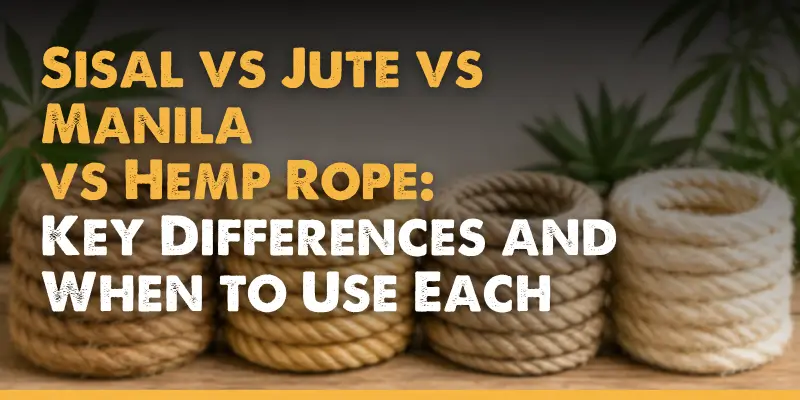

Choosing the right rope for your project means understanding the properties of natural fiber rope and synthetic rope options.
This rope guide compares sisal, jute, manila rope and hemp rope, highlights differences in fiber, strength, durability, environmental impact and practical uses … from marine applications and mooring to rope swings, landscaping and DIY projects.
Quick summary
- Hemp rope (natural hemp rope): durable, low stretch, mildew resistant, easier on the hands; great all-around natural fiber option.
- Manila rope (natural manila rope, promanila rope): strong coarse abacá plant fiber, good abrasion resistance and marine use but more prone to mildew when wet.
- Jute rope (jute rope: soft, biodegradable, economical for craft, landscaping, and twine but lower breaking strength and more susceptible to rot.
- Sisal rope (sisal, sisalana, twisted sisal: coarse, good for tug of war or rustic railing and general outdoor use but less UV resistance and can stiffen when wet.
Bulk Hemp Warehouse
Jute vs. Manila vs. Sisal vs. Hemp Rope
Key differences and when to use each natural fiber rope
Corchorus plant
Jute
Soft, golden-brown, biodegradable
Strength
Durability
Water resist.
Eco-friendly
Softness
Affordability
Crafts & macrame
Home decor
Gift wrapping
Indoor only
“Softest and cheapest — but breaks down fast outdoors.”
Abaca plant
Manila
Classic tan, all-purpose workhorse
Strength
Durability
Water resist.
Eco-friendly
Softness
Affordability
Dock lines
Decorative
Landscaping
General utility
“Good middle ground — degrades when wet over time.”
Agave plant
Sisal
Coarse, stiff, rough-textured fiber
Strength
Durability
Water resist.
Eco-friendly
Softness
Affordability
Cat scratchers
Agriculture
Baling twine
Rugs & mats
“Very coarse — great grip and abrasion resistance, not for bare hands.”
Cannabis sativa
Hemp
Strongest natural fiber rope on earth
Strength
Durability
Water resist.
Eco-friendly
Softness
Affordability
Marine & sailing
Heavy rigging
Outdoor & UV
Industrial
“Gets stronger when wet. Mold-resistant, UV-resistant, long-lasting.”
Quick decision guide
Jute
Soft, affordable, indoor crafts and decor. Keep it dry.
Manila
Natural look, moderate strength. Light outdoor and utility work.
Sisal
Rough grip, low cost. Agriculture, cat toys, and abrasion-heavy tasks.
Hemp
Maximum strength and longevity. The sustainable choice for serious work.
Materials and fiber origins
Natural hemp rope is made from the cannabis/hemp plant and produces strong, staple spun or twisted hemp cordage.
Manila rope comes from the abacá plant (abaca plant, abacá) and is commonly sold as natural manila rope or promanila rope.
Sisal is from the agave-like sisalana plant and produces twisted sisal suitable for coarse, rustic applications. Jute rope is a softer plant fiber often used for twine, yarn and indoor projects.
Strength, breaking strength and performance
Breaking strength varies by diameter and construction, but generally:
- Hemp rope: high-tenacity natural fiber with good breaking strength and low stretch; excellent for many applications where you want a biodegradable alternative to synthetic fibers like nylon, polyester or polypropylene rope.
- Manila rope: strong, especially in wet conditions compared to other natural fibers, and historically used in marine use and mooring; offers good abrasion resistance.
- Sisal rope: moderate strength but coarser and stiffer; suitable for climbing ropes in decorative contexts, tug of war and railing, but not the best for heavy-duty marine mooring.
- Jute rope: lowest breaking strength among these; best for crafts, indoor rope products, twine and compostable uses.
Durability, outdoor use, saltwater and mildew
When ropes get wet, their behavior differs: hemp’s fibers resist mildew and mold better than jute and sisal, and hemp is generally more UV resistant than untreated natural fibers.
Manila is often used in saltwater and marine applications but can suffer from mold and mildew if not maintained.
Sisal and jute are more prone to mildew and decay in prolonged damp or marine exposure.
For marine use where synthetic fibers are not desired, natural hemp rope is often the best rope option for long-term outdoor use.
Handling, abrasion and comfort
Hemp rope is easier on the hands compared with rougher manila or sisal.
Hemp’s surface is less coarse, making it a preferred choice for hammock suspension, rope swings, climbing ropes and railing where repeated handling matters.
Manila and sisal can cause more abrasion on the hands and may require gloves. Jute is soft but wears faster under abrasive conditions.
Environmental impact and biodegradability
All four natural fiber ropes are biodegradable and compostable to varying degrees.
Hemp rope stands out: it’s a sustainable crop that produces durable natural fiber rope without the environmental persistence of synthetic fibers like polyethylene, polypropylene rope or polysteel rope.
If you need a rope that balances performance and environmental responsibility, natural hemp rope is a clear rope option.
Synthetic ropes vs natural ropes
Synthetic fibers such as nylon rope, polyester rope, polypropylene rope and high-tenacity polyethylene offer high strength, UV resistance and lower water absorbency.
Nylon is elastic and good for shock loads, polyester and dacron have better UV resistance and lower stretch, and polyethylene (including polysteel and polypropylene) floats and resists rot.
However, synthetic fibers are not compostable. Natural hemp rope gives many advantages of natural fiber rop, low stretch, abrasion resistance and biodegradability … making it superior for users seeking a natural rope product.
Common applications by rope type
- Hemp rope: marine use, mooring, rope climbing, hammock and hammock hardware, railing, general outdoor and landscape, rope swings, DIY projects, sgt knots® splicing and decorative cordage.
- Manila rope: nautical lines, mooring, towlines, rustic railing, rope for your project where coarse appearance and abrasion resistance are desired.
- Sisal rope: landscaping, garden twine, rustic decoration, tug of war, tactile applications where coarse texture is acceptable.
- Jute rope: interior crafts, twine, yarn, product information tags, biodegradable packaging and temporary uses.
Working with rope: knots, splice and care
Natural fibers respond well to traditional knot techniques.
Whether using paracord, 550 cord for small jobs or heavy cordage, hemp rope is easy to splice and tie, holds knots well and shows low slip.
For marine splice or a decorative splice, hemp’s consistent fiber spin and staple spun constructions make clean splices.
To reduce mold and mildew, keep natural ropes dry and treat with oils or preservatives when used in prolonged wet or saltwater environments.
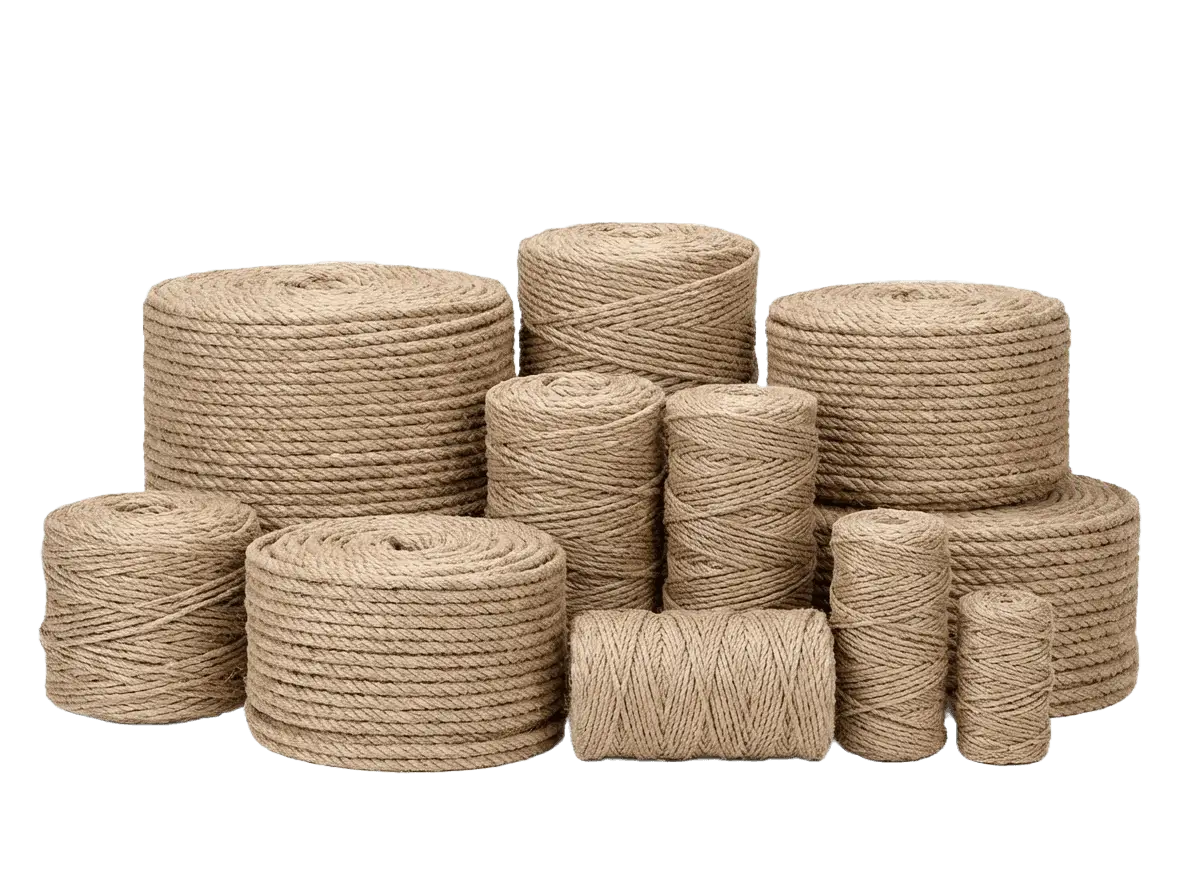
Why choose hemp rope — Bulk Hemp Warehouse experience
Bulk Hemp Warehouse has over 20 years experience working with hemp rope and rope products.
Our experience shows natural hemp rope is superior to many other ropes when you need a sustainable, versatile, high-performing natural fiber.
Hemp offers low stretch, good abrasion resistance, resistance to mold and mildew compared with jute and sisal, and is easier on the hands than manila.
For many applications, from marine applications and mooring to landscape, railing, hammock suspension, rope climbing and general outdoor use, hemp rope is often the right rope choice.
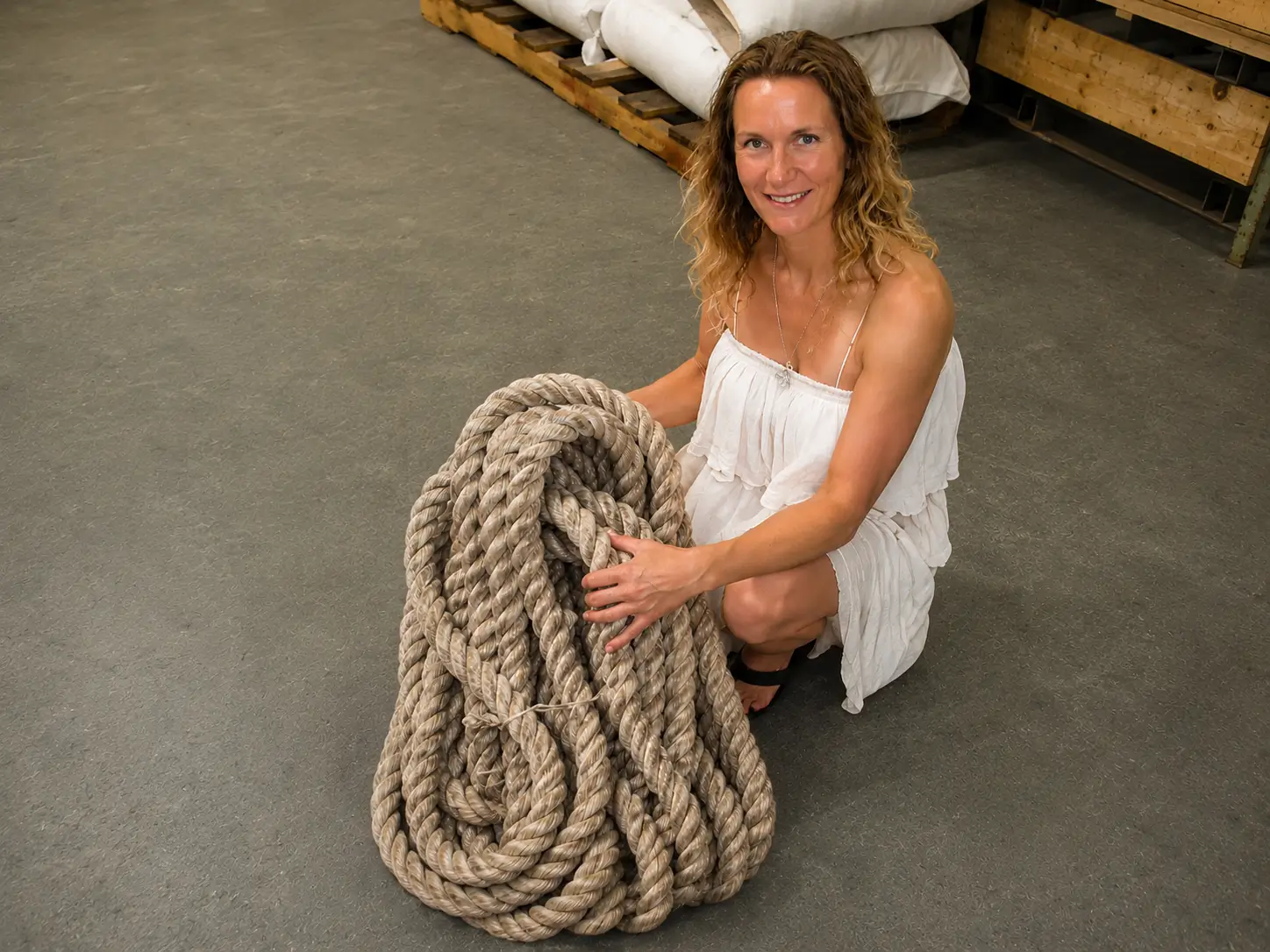
Choosing the right rope for your project
Consider these factors when picking between hemp, manila, sisal and jute:
- Strength and breaking strength needed
- Exposure to water, saltwater and UV rays
- Comfort and abrasion on hands
- Biodegradable or synthetic requirement
- Appearance and texture for decorative or nautical uses
If you want a natural fiber rope that balances performance, sustainability and many applications, natural hemp rope from Bulk Hemp Warehouse is a top rope option backed by decades of product information and real-world use.
Further reading and products
Explore rope available at Bulk Hemp Warehouse to compare twisted hemp, twisted sisal, natural manila rope and jute rope options.
Check product information for diameter, yarn construction, staple spun vs high-tenacity options, UV resistance and recommended uses.
For heavy-duty synthetic alternatives consider nylon rope, polyester rope or polyethylene rope but remember hemp’s advantages when biodegradability and natural fiber performance are priorities.
For help choosing the best rope for your project, whether rope swings, mooring, hammock, nautical use, landscape or DIY projects, contact Bulk Hemp Warehouse and benefit from our 20+ years experience in hemp rope.
In short, no. Hemp rope and manila rope are two different types of rope.
What are their similarities
What are their differences?