

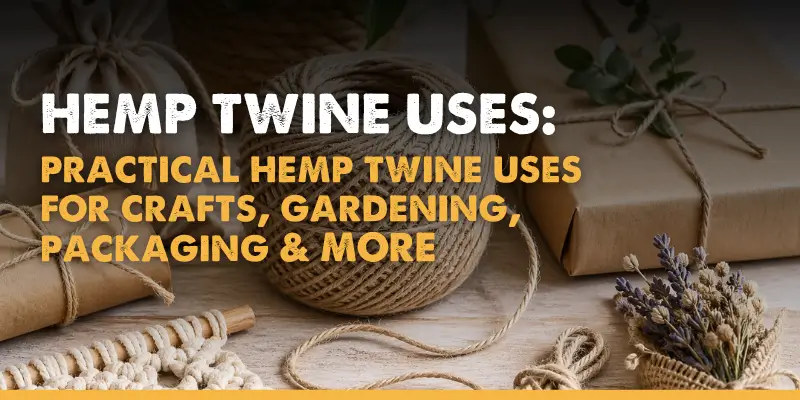
Hemp Twine Uses: Practical Ideas and Benefits
Page 3
- Author Tyler Hemp
- Categories: Hemp Uses
- Last Updated:
Hemp Twine Uses: Practical Ideas and Benefits

Tyler Hemp
Tyler has been supplying high quality industrial hemp seed & fiber products in bulk for projects around the world, for over 20 years. He's super passionate about hemp, and LOVE to educate on the topic.
Table of Contents
If you have ever stood in a craft aisle or garden shed wondering whether one spool can handle tags, plant ties, and simple home projects, hemp twine is usually the material people reach for first.
Understanding hemp twine uses helps you choose a natural option that looks good, knots well, and suits light-duty work without confusing it with heavy rope.
At Bulk Hemp Warehouse, years of working with hemp fiber products have shown us that small differences in finish, cord diameter, and intended use matter more than most buyers expect.
This guide explains what hemp twine is, where it works best, how it compares with other types of twine, and how to avoid the common mistakes that shorten its life.
What Hemp Twine Is and Why People Use It
Hemp twine is a slim hemp cord made from natural fiber, usually thinner than hemp rope and often thicker or more textured than fine craft cord.
That middle ground matters because cord diameter determines whether the twine feels right for paper crafting, gardening, decorative use, or other light-duty tasks.
People choose it because it offers grip, a rustic surface, and a biodegradable alternative to synthetic cord in projects where appearance matters as much as function.
In practical terms, hemp twine is closer to kitchen twine, butcher twine, or all-purpose hemp twine than to load-bearing rope, which is why it performs best for tying, wrapping, labeling, and simple handmade work.
How Hemp Twine Compares With Jute and Synthetic Twine
Hemp and jute are both plant fibers, but hemp is often selected for better durability, firmer texture, and a cleaner knotting feel, especially when projects include beads or repeated handling.
That difference matters because jute can feel softer and more rustic, while hemp usually gives a slightly stronger, more structured finish.
Synthetic twine often wins on moisture resistance, especially outdoors, but it introduces plastic into projects where many people want a compostable or lower-waste material.
For readers comparing types of twine, hemp usually sits in the sweet spot between natural appearance and practical strength, even though it will not match synthetics in prolonged wet exposure.
Most Common Hemp Twine Uses Around the Home
Around the home, hemp twine works well for bundling mail, tying recipe cards, wrapping gifts, organizing cords, and securing pantry items that do not need heavy tension.
Its value is not raw strength alone, but the combination of function and appearance that makes routine storage look intentional rather than temporary.
It is especially popular in rustic decor, hemp DIY, and simple fixes shown in DIY tutorials because the material blends into shelves, baskets, jars, and handmade displays.
Brands such as Hemptique helped normalize this look in craft culture, but the broader reason for its appeal is that natural twine can solve small organizing problems without adding plastic clips or synthetic ties.
Packaging and Gift Wrapping
Hemp twine is widely used for gift wrap, bakery boxes, hang tags, product packaging, and folded paper bundles because it instantly adds texture and a handmade finish.
For small makers, eco-friendly packaging is not only a visual choice but also a signal of material quality and values, especially when the rest of the presentation is paper-based and compostable.
Kitchen and Household Organization
In kitchens, people use it to tie herb bundles, label jars, group utensils, and wrap linens for storage or presentation.
If a project involves food contact, manufacturer labeling matters because not every spool marketed as kitchen twine or butcher twine is automatically specified as food-safe.
Creative Projects You Can Make With Hemp Twine
Crafters use hemp twine for jewelry making, macramé, scrapbooking, and paper projects because it is easy to cut, knot, and combine with wood, metal, or ceramic accents.
That flexibility matters for beginners since a small spool can support several projects without requiring specialized tools.
Many handmade pieces also keep sentimental value longer than their material cost suggests, which is why hemp jewelry and keepsakes remain popular across age groups.
At Bulk Hemp Warehouse, that personal connection is familiar because one of the founders, Tyler Hoff, was introduced to hemp twine when he was about 12 and used it to make bracelets, necklaces, and macramé-style projects, including the hemp necklace shown in his old 7th grade photo.
Jewelry and Wearable Crafts
Common wearable projects include a necklace, bracelet, anklet, and simple beadwork, with the hemp necklace remaining a classic beginner piece.
Waxed hemp twine is often easier for knotting and cleaner finishes because the coating reduces fray and helps the line slide through tighter patterns.
Paper Crafts and Decorative DIY
For paper crafts, hemp twine adds dimension to scrapbooking pages, card accents, ornaments, candle wraps, and hanging decor.
It is effective because it creates a tactile finish with almost no equipment, which lowers the barrier for decorative DIY compared with fabric sewing or wire work.
How Hemp Twine Works in the Garden
In the garden, hemp twine is useful for tying plants, marking rows, bundling herbs, and supporting light stems that need guidance rather than force.
Its renewable and biodegradable character matters in seasonal gardening because many growers prefer materials that can be composted or discarded with less plastic waste.
Still, outdoor use requires realistic expectations because tensile strength varies by thickness and wet weather shortens service life.
Hemp works well when the job is gentle support, but repeated soaking and tension can weaken fibers faster than synthetic alternatives.
Plant Support and Trellising
Gardeners commonly use hemp twine to loosely tie tomatoes, herbs, beans, and flowers to stakes or trellises.
A loose figure-eight tie is usually safer than a tight loop because stems expand as they grow, and rough natural fiber can cut into soft tissue if over-tightened.
Garden Marking and Bundling
It also works for row marking, bundling harvested herbs, and tying seed packets or small tools together for seasonal storage.
The tradeoff is that prolonged wet conditions reduce lifespan, so hemp is best treated as a practical seasonal material rather than a permanent outdoor fixture.
Choosing the Right Hemp Twine for the Job
Not all hemp twine performs the same, and the most important buying factors are diameter, finish, spool length, and intended use.
A spool that feels perfect for tags or beads may be frustrating for packaging or gardening because small size changes alter knot hold, abrasion, and handling.
Bulk Hemp Warehouse carries different twine products for exactly that reason, including finer craft-friendly options and thicker utility styles, rather than treating all-purpose hemp twine as one interchangeable material.
Readers get better results when they check product details first instead of assuming every hemp cord behaves like standard kitchen twine.
Diameter, Finish, and Strength
A 1mm hemp twine is typically best for jewelry, beadwork, tags, and delicate paper crafts where a bulky knot would look clumsy.
A 2mm hemp twine fits many all-purpose household and packaging jobs, while 3mm hemp twine is usually better for garden tying, rustic wrapping, and projects that need more visible texture.
Waxed hemp twine holds knots neatly and resists fraying, which helps in jewelry and detail work.
Unwaxed hemp twine feels more natural and slightly rougher, which can improve grip in packaging and decorative tying but may shed more fiber at the cut ends.
Benefits and Limitations to Know Before You Start
Hemp twine appeals to people who want renewable, biodegradable, compostable, plastic-free materials with a warm, organic appearance.
That combination is hard to replicate with synthetics, and it explains why hemp remains relevant across decor, packaging, and craft categories even when cheaper plastic twines exist.
Its limits are equally important: moisture sensitivity, a rougher texture for some uses, and poor suitability for heavy loads or safety-critical work.
The right conclusion is not that hemp is better for everything, but that it is better for tasks where natural materials, moderate grip, and visual texture are part of the goal.
When Hemp Twine Is a Great Choice
It is a strong fit for crafts, packaging, decor, gardening, and light-duty household tying where the twine is visible and part of the finished look.
For readers who value lower-plastic materials, hemp offers a practical bridge between function and environmental intent.
When to Choose Something Else
Avoid hemp twine for climbing, lifting, marine exposure, or structural tasks where failure would create risk.
If the project involves repeated soaking, harsh weather, or sustained tension, a synthetic line may simply last longer and perform more predictably.
Common Mistakes to Avoid With Hemp Twine
The most common mistake is choosing twine by appearance alone instead of matching thickness to the job.
Decorative twine can look sturdy on the spool yet fail quickly if used for hanging weight, tight plant restraint, or wet outdoor stress.
Another mistake is poor storage, because natural fiber absorbs ambient moisture and can mildew or stiffen if left in damp sheds or basements.
A dry storage area protects usability and preserves knot performance, which is especially important for crafters who keep spools for months.
Simple Tips for Better Results
Test knot strength before full use, especially for product packaging, hanging decor, or garden ties that will be moved.
Trim ends cleanly, and for craft projects seal or tuck frayed ends when needed so the finish looks deliberate rather than fuzzy.
Key Takeaways for Using Hemp Twine Well
Hemp twine is a versatile material for crafts, gardens, packaging, and everyday organization because it combines natural texture with reliable light-duty performance.
If you match the size and finish to the task, it can do the work of kitchen twine, gift wrap string, plant ties, and decorative cord without feeling out of place in any of them.
That versatility also connects to the bigger story of hemp as a practical fiber with many forms and uses, from the history of hemp its 10000 uses an animation to great list of 10 hemp rope uses to get you inspired, the many uses of hemp canvas tote bags, exploring hemp hurd its versatile uses and benefits, and the ultimate guide to hemp seed oil benefits uses common questions.
Start with a simple project like tags, a bracelet, or plant ties, and you will quickly see which spool belongs in your regular toolkit.
FAQ
What is hemp twine used for?
Hemp twine is commonly used for crafts, gift wrapping, hang tags, gardening, plant ties, household bundling, and rustic decor.
It works best for light-duty tasks where a natural look and biodegradable material matter.
What are the disadvantages of hemp rope?
Hemp rope and twine can absorb moisture, wear faster in wet conditions, and feel rougher than some synthetic options.
They are also not the right choice for heavy-load, marine, or safety-critical applications.
What can you make with hemp twine?
You can make necklaces, bracelets, macramé pieces, gift wrap accents, ornaments, jar ties, plant supports, and simple home decor.
Many projects are beginner-friendly and only require a small spool.
What can you use hemp rope for?
Hemp rope is often used for decor, landscaping accents, gardening, crafts, and light utility jobs.
For heavier or weather-exposed tasks, check strength requirements carefully before choosing it.


OTHER EDUCATIONAL HEMP POSTS



Explore Other Posts by Bulk Hemp Warehouse