


While there are hundreds of hemp fiber uses, most people first meet hemp fiber as a fabric, a rope, or some twine.
For me, my very first encounter with hemp fiber, was making macromé bracelets and necklaces in my early teens.
To understand hemp fiber uses, you need to look past the plant’s reputation and focus on which varieties and part of the hemp stalk becomes which material, because that determines performance far more than the word “hemp” alone.
This guide explains what hemp fiber actually is, where it works best, how bast fiber differs from hurd, and how to choose the right form for textiles, construction materials, paper products, composites, and more.
What Hemp Fiber Is (And Why It’s Different From Hemp Seed Products)
Hemp fiber comes from the stalk of industrial hemp, a regulated form of Cannabis sativa grown for practical outputs such as fiber and seed rather than cannabinoid production.
While hemp plants do produce cannabinoids, in the flowering tops, the fiber aspect of the plant comes from the stalks.
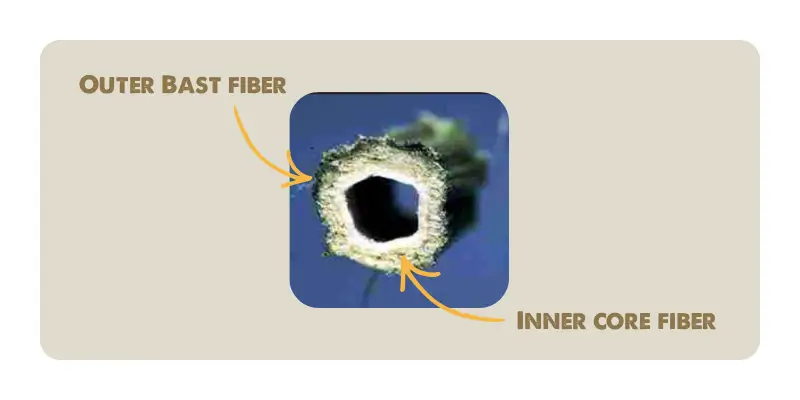
The hemp stalk contains two distinct materials: the outer bast fiber and the inner woody core called hurd, also known as shiv, and each supports very different products, and they each have their unique properties.
That distinction matters because we often get calls from potential customers, and they ask if we offer “hemp” when they really mean something more specific. Ultiamtely, the entire plan is hemp, whether it’s the CBD biomass, or textile-grade long bast fiber, and those are separate supply chains with different genetics, harvest timing, and processing methods.
Fiber hemp is bred and grown for stalk quality, grain hemp is grown for seed yield, and cannabinoid hemp is grown for flowers and resin, so one crop type should not be assumed to substitute cleanly for another.
Performance also depends on processing, not just variety of hemp.
Retting, decortication, cleaning, cottonization, fiber length, and fiber fineness all shape whether a batch becomes soft clothing, durable rope, stable nonwoven insulation, or low-grade plastics filler.
Bast Fiber vs Hurd: Two Materials, Two Job Descriptions
Bast fiber is the long, stronger fiber found in the outer layer of the stalk, and it is the part most associated with textiles, cordage, and reinforcement uses.
High bast quality often correlates with better tensile strength and more predictable spinning or composite behavior.
Hurd is the lighter, woody core from inside the stalk, and it performs more like a plant-based aggregate than a textile fiber.
That makes hurd useful in hempcrete, animal bedding, absorbents, and some panel products where bulk, porosity, and moisture interaction matter more than long-fiber strength.
A Quick Note on “Industrial Hemp” vs Marijuana
Industrial hemp refers to Cannabis sativa cultivated under legal THC thresholds that vary by country and market. In the United State, the legal definition of industrial hemp is any part of the cannabis plan containing 0.3% THC or less by weight.
That legal distinction matters for compliance, but it does not explain fiber quality, which is driven by agronomy and processing rather than psychoactive chemistry.
This article stays focused on fiber applications, because a buyer choosing hemp-lime, hemp paper, or hemp twine needs material data, not intoxication debates.
And it’s important to note that even if you were to smoke or consume pounds and pounds of hemp stalks, there would be no psychoactive effect because the levels are so insignificant.
The Big Picture: Why Hemp Fiber Is a Good Choice
Hemp gets selected when a project needs a useful balance of durability, moderate weight, and plant-based sourcing.
Hemp bast fiber has been valued and used as rope, twine, canvas, and clothing because tensile strength and abrasion tolerance matter more in those categories than a luxury hand-feel alone.
Environmental interest also plays a crucial role, but the cost-analysis of hemp is one of the biggest barriers of entry.
Industrial hemp is a fast-growing crop and often needs fewer pesticide inputs than some conventional fiber systems, yet the final footprint still depends on farming practices, retting methods, transport distance, and how heavily the fiber is processed.
All of which increase the overall cost of working with this natural fiber.
The crop also offers circularity potential because multiple parts of the same stalk can enter different product streams.
A system that uses bast fiber for textiles and hurd for hempcrete or animal bedding can reduce waste, which is materially more important than broad “green” branding claims.
Environmental Claims to Make Carefully
Absolute claims about carbon, yield, or forest replacement often oversimplify a complex supply chain.
A hemp paper project may support pressure relief on forestry resources, but economics, pulping infrastructure, and local transport can erase theoretical advantages if they are ignored or not given serious consideration.
Deforestation is a legitimate concern, yet hemp should be framed as a supplementary fiber source rather than a universal replacement for wood pulp.
That is the more credible position for analysts, brands, and procurement teams who want evidence instead of slogans.
While hemp can certainly be more durable, longer lasting and not deteriorate as quickyl as tree paper, it may not have the idea properties for certain applications…
In his book, The Emperor Wears No Clothes, Jack Herer points out that, “before the 1880s, the vast majority of the world’s paper was created by recycling discarded hemp materials, such as old sails, ropes, and worn-out clothing (rags). Our ancestors were “too thrifty to just throw anything away,” and these hemp scraps were mixed together and recycled into new paper.”
“Hempower” Your Supply Chain Without the Hype
At Bulk Hemp Warehouse, one recurring lesson from over 20 years in hemp is that the crop rewards practical thinking more than idealism.
You can hempower a supply chain by matching the right hemp form to the right use, but no responsible expert should present hemp as a miracle crop.
While the hemp fiber uses are innumerable, and the benefits are phenomenal, compared to other plant fiber applications, hemp fiber also has its limitations.
Farmers, processors, designers, and manufacturers all influence impact and efficacy.
The real value of hemp appears when product innovators respect material limits instead of forcing the plant into applications it does not fit.
Step-by-Step: Match the Hemp Fiber Use to the Right Form
The right starting point is not the crop but the product requirement.
If you need softness, absorbency, insulation, mold resistance, stiffness, or high tensile strength, those targets will tell you whether to source bast fiber, hurd, yarn, woven fabric, nonwoven mat, or a decorticated blend.
The second step is to confirm how processed the material must be.
Many hemp project failures happen because buyers source “hemp fiber” without specifying retting quality, cleanliness, cut length, or consistency, and those variables affect spinning, bonding, and moisture behavior.
Step 1: Define Performance Needs First
Textiles need comfort, drape, dye response, and skin feel, while construction materials need hygrothermal stability and moisture detailing.
Composites need repeatable specs, because inconsistent natural fiber can produce inconsistent mechanical results.
Decide early whether you need bast, hurd, or both.
That single choice prevents common mistakes such as trying to make soft clothing from coarse, poorly processed stalk fiber or expecting hurd to behave like reinforcement fiber.
Step 2: Pick a Processing Path That Fits the Use
Decortication separates bast fiber from hurd, and the quality of that separation can make or break downstream performance.
Cleaner separation usually means better textile or composite outcomes because contaminants interfere with spinning, bonding, and finish quality.
Cottonization shortens and softens bast fiber so it can run on cotton-oriented systems, but that convenience comes with tradeoffs.
Shorter fibers can improve process compatibility while reducing some of the long-fiber strength advantages that make hemp distinctive.
Step 3: Sanity-Check Compliance and Safety
For apparel, review dyes, finishes, shrinkage behavior, and skin sensitivity risks linked to blends or treatments.
For building, verify local codes, fire ratings, moisture management, and installer competence before assuming a hemp-based assembly is approved.
Everyday Hemp Fiber Uses (The Ones Most People Actually Touch)
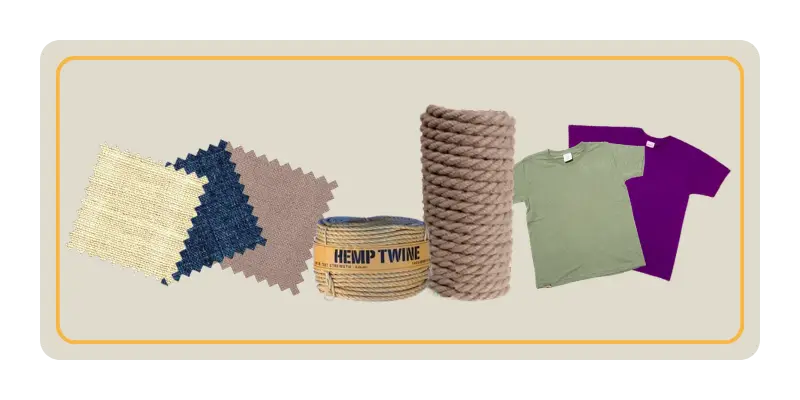
The most familiar hemp fiber uses show up in textiles, clothing, rope, hemp twine, and household fabrics.
These categories matter because they translate abstract sustainability talk into products people can actually feel, wash, wear, and compare against cotton, polyester, or jute.
Footwear is another practical category, especially in canvas-like uppers, laces, and reinforcement textiles.
Hemp often appears in blends here because durability and breathability are useful, but softness and flexibility still need careful finishing and design.
Textiles: From Workwear Tough to Soft Everyday Blends
Hemp textiles can range from rugged canvas to softer shirting, depending on fiber preparation and blending.
Many mills blend hemp with cotton, TENCEL™ Lyocell, or recycled fibers because blending can improve hand-feel, drape, and spinning efficiency while keeping some of hemp’s durability profile.
Consumers often perceive hemp clothing as breathable, sturdy, and less prone to odor retention than some synthetics, though those experiences vary by knit, weave, and finish.
That is why fabric specification matters more than generic plant identity when you are buying bedding, upholstery, or daily-wear garments.
Twine and Rope: The Classic Hemp Fiber Application
Rope is one of the oldest and clearest examples of why bast fiber still matters.
Strong natural fibers with good abrasion resistance remain useful in cordage, and hemp twine continues to appeal for gardening, crafts, macramé, and rustic packaging aesthetics.
My own first practical connection to hemp was through hemp twine bracelets and necklaces, which is how many people discover the material before they ever study the crop.
That small craft use actually teaches a bigger truth: when a fiber is easy to handle, tie, braid, and trust, adoption starts at the human scale.
For readers comparing options, natural hemp rope how to spot genuine fiber and choose the right type offers a useful deeper reference.
Industrial Hemp Fiber Uses: Building Materials, Paper, and Packaging
Industrial applications move hemp from lifestyle material to systems material.
In this category, hemp appears in hempcrete, insulation, fiberboard, paper, molded packaging, and bioplastics, which means buyers must think in terms of binder compatibility, moisture behavior, and processing economics.
Construction and paper are especially important because they test whether hemp can perform at scale.
A fiber that works in a tote bag proves versatility, but a fiber that performs in wall assemblies or specialty paper proves industrial relevance.
Hempcrete and Hemp-Lime: What It Is (And What It Isn’t)
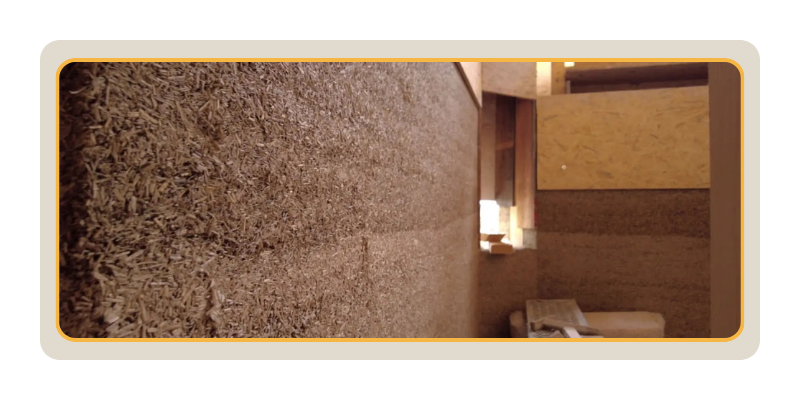
Hempcrete, often called hemp-lime, combines hurd with a lime binder to create a non-structural infill or insulating material. It is not structural concrete, so it needs a frame, and that single fact prevents one of the most common misunderstandings in hemp building.
Its appeal usually centers on vapor permeability, thermal comfort, and carbon storage potential across the material system.
Those benefits can be meaningful, but only when wall design, curing conditions, and moisture detailing are handled correctly.
Hemp Paper: Where It Makes Sense
Hemp paper is best understood as a targeted solution, not a total replacement for wood pulp.
It can make sense for specialty papers, archival uses, and some high-strength applications where fiber characteristics or branding value justify the processing pathway.
People often connect hemp paper with deforestation, and the concern is fair, but infrastructure still governs feasibility.
Hemp can supplement fiber supply responsibly, yet mills, pulping methods, and cost structures decide whether that promise becomes a market reality.

Bioplastics and Packaging: The Fiber’s Role
In packaging and bioplastics, hemp usually acts as reinforcement fiber or filler rather than the entire material.
That distinction matters because a hemp-filled plastic is not automatically compostable, and compostability depends on resin chemistry and local composting systems.
For product teams exploring adjacent ideas, the many uses of hemp canvas tote bags shows how fiber choice influences reusable packaging strategy.
Advanced and “Little-Known” Uses: Composites, Remediation, and Absorbents
Some of the most interesting hemp applications sit outside mainstream retail.
Natural fiber composites, spill absorbents, phytoremediation research, and animal bedding show how different fractions of the hemp stalk can solve very different technical problems.
This is where material selection gets more nuanced.
A buyer who only associates hemp with clothing can miss the fact that hurd and bast occupy separate performance niches in industrial design.
Natural Fiber Composites: Why Manufacturers Like Hemp
Composites use hemp as a reinforcement phase in automotive panels, consumer goods, and building panels where lightweighting and stiffness can matter.
Compared with some mineral fillers, plant fibers can reduce weight and change tactile or acoustic properties, which is why manufacturers keep testing them.
The challenge is consistency.
Moisture content, fiber length, surface chemistry, and cleanliness all affect resin bonding and repeatability, so hemp composites succeed when supply discipline matches design ambition.
Phytoremediation: What the Research Suggests
Phytoremediation refers to using plants in contaminated environments, and hemp has been studied for that role in certain contexts, including discussions tied to Chernobyl.
The key analytical point is that research interest does not equal universal field suitability, because contamination type, soil chemistry, and disposal rules determine whether hemp is appropriate.
Hurd also performs well as animal bedding and as an absorbent because it is light, porous, and effective at taking up moisture.
That makes it practical in stalls and small-animal settings where cleanup efficiency matters more than long-fiber strength.
For more on processing context, see hemp fiber processing and how china processes hemp fiber from an american farmer.
Common Mistakes to Avoid When Choosing Hemp Fiber Uses for a Project
The biggest mistake is assuming all hemp fiber is interchangeable.
Retting method, decortication quality, fiber fineness, moisture content, and contaminant levels can change product behavior enough to turn a promising prototype into a failed production run.
The second mistake is overpromising sustainability without auditing the full chain.
Imported processing, energy-intensive refinement, and synthetic blends can alter the footprint substantially, so broad claims should be tied to actual sourcing data.
Mistake: Treating Hemp as a Drop-In Replacement Without Testing
Hemp should be tested in small prototypes before full adoption in textiles, paper, composites, or hempcrete mixes.
Material substitution works best when you confirm specs such as fiber length, fiber fineness, moisture content, and acceptable contaminant thresholds.
That testing mindset protects both performance and credibility. Natural fibers reward specification discipline more than assumption, especially when manufacturing tolerances are tight.
Mistake: Confusing Hemp Fiber Benefits With Hemp Seed Nutrition
Hemp fiber and hemp seed belong to the same plant family but solve different problems.
Claims about comfort, breathability, and material safety apply to textiles and surfaces, while nutrition claims belong to hemp seed and should be labeled as a separate topic.
Key Takeaways: How to Use Hemp Fiber Well
The strongest use cases for hemp cluster around textiles, rope, hemp twine, paper, construction material, insulation, packaging, and composites.
That pattern is not random, because hemp performs best where bast fiber strength or hurd bulk and absorbency line up with the actual job.
A credible buying process starts with performance requirements, then moves to bast versus hurd, then to processing level and compliance review.
That sequence is more reliable than buying on sustainability language alone.
A Simple Decision Shortcut
If you need strength, look first at bast fiber for rope, durable textiles, and composites.
If you need bulk, absorbency, or insulation, start with hurd for hempcrete, animal bedding, and absorbent applications.
A practical hemp strategy is specific, test-based, and honest about tradeoffs. For a broader foundation, the ultimate guide to hemp fibers benefits uses more is a useful companion resource.
FAQ FOR Hemp Fiber Uses
What is hemp fiber used for?
Hemp fiber is used for textiles and clothing, rope and hemp twine, paper, packaging, composites, insulation, and building materials such as hempcrete.
Bast fiber usually serves strength-focused uses, while hurd serves bulk and absorbent uses.
Is hemp fiber good for you?
As a material, hemp fiber is valued for durability, breathability, and everyday comfort in many fabrics. Individual experience depends on the blend, weave, dyes, and finishes, so softness is not identical across all hemp textiles.
Is hemp good for prediabetes?
That question usually refers to hemp seeds, not hemp fiber. Fiber materials are not a dietary intervention, so anyone asking about prediabetes should discuss hemp seed nutrition with a qualified clinician.
What does the Bible say about hemp?
Most Bible translations do not mention hemp explicitly. Discussions usually focus on broader themes such as stewardship, plants, and lawful use rather than a direct statement about hemp fiber uses.