



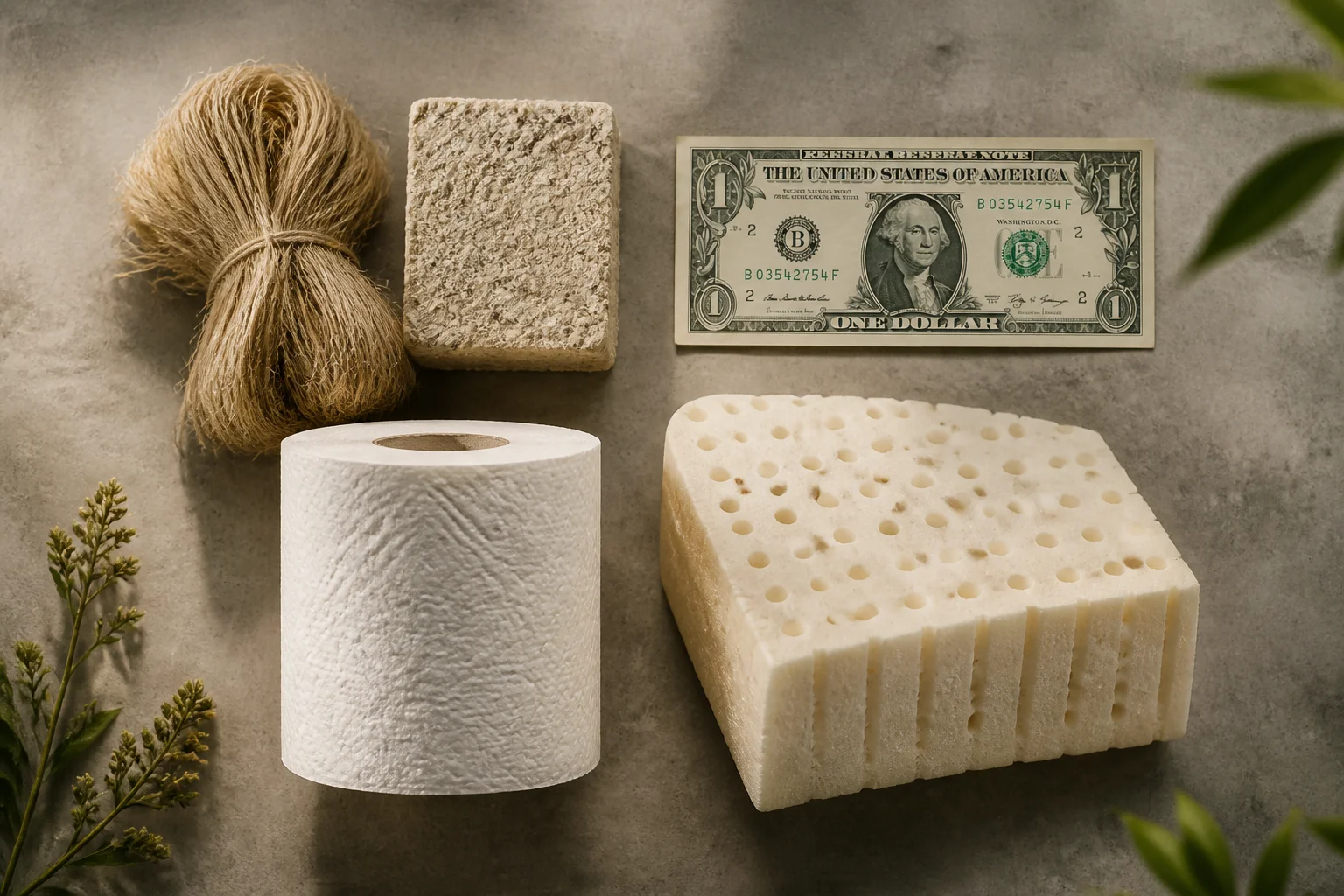

What four ordinary things actually take to make
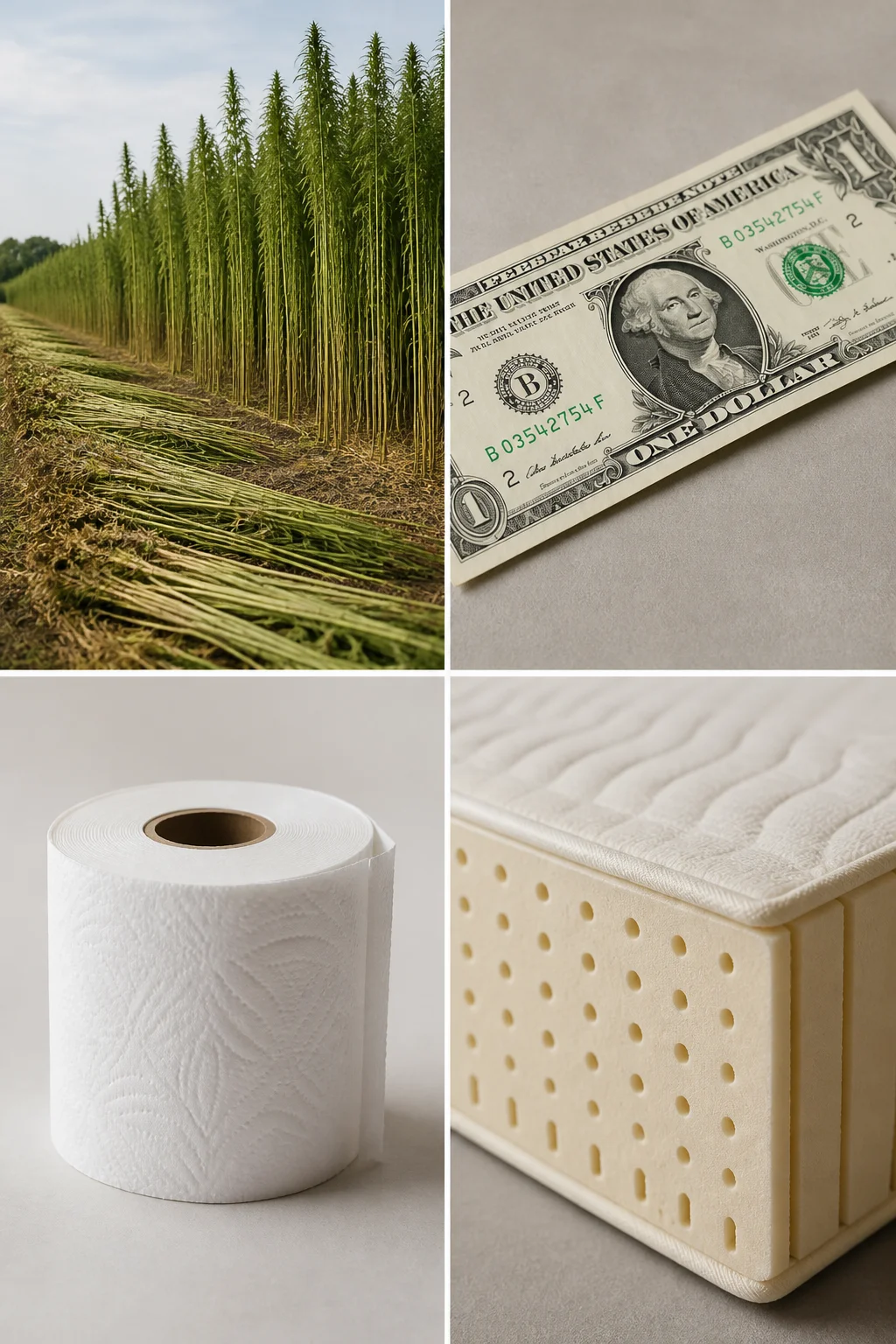
When did you last look at a dollar bill, a roll of toilet paper, a mattress, or a bundle of hemp fiber and wonder how it got that way?
Most of us never do. These things show up, we use them, we move on.
That habit hides some genuinely impressive engineering.
A documentary from Agriculture Insight follows four of them from raw source to finished product: industrial hemp, the paper in US currency, toilet paper, and natural-latex mattresses.
Watch it and the "ordinary" label starts to look wrong. Each one runs through controlled processing that rewards precision at every step.
Take hemp, and please note the distinction up front: this is industrial fiber hemp grown for stalks and seed, a different crop and a different purpose from the psychoactive plant people often confuse it with.
In the video, cut stalks lie in the field for several days to weeks so that moisture and microbes loosen the fiber, a step called retting, before the dried stalks head to a facility that splits the tough outer fiber from the woody inner core. One stream becomes textiles.
The other becomes building material.
The dollar in your wallet is not wood paper at all. It is a cotton-and-linen blend layered with watermarks, threads, and inks designed to be difficult to copy.
Toilet paper starts as a living tree, usually eucalyptus, that gets chipped, cooked into pulp, pressed, dried, and embossed into the roll you recognize.
A latex mattress begins as sap tapped from a rubber tree, coagulated, rinsed, and molded into foam with ventilation holes formed by pins set into the mold.
Every section here follows the same arc: source in the field or forest, the processing that transforms it, and the finished product you actually buy.
Concrete numbers and real machinery keep it honest, and where a figure comes from the video rather than an independent measurement, I will say so.
By the end you will know how hemp fiber and hempcrete, US currency, toilet paper, and latex mattresses are each made. You will also see why "ordinary" was never a fair description.
Hemp before it becomes anything: the law, the water math, and the harvest
Start with the legal line that trips people up. Industrial fiber hemp and the psychoactive plant are the same species, Cannabis sativa L., separated by a threshold.
Federal law counts a plant as hemp only when its delta-9 THC stays at or below 0.3% on a dry-weight basis.
Cross that line and it is legally marijuana, controlled under the Controlled Substances Act. Fiber hemp grown for stalks and seed sits far below the cutoff and does not get anyone high.
The 2014 Farm Bill opened research pilot programs at that same 0.3% threshold.
The 2018 Farm Bill went further, dropping the word "industrial," removing compliant hemp from the marijuana definition, and turning it into an agricultural commodity farmers could grow commercially.
The FDA still regulates hemp-derived foods and supplements, so legal to grow does not mean unregulated to sell.
Why does the crop earn its green reputation? Water is the clearest comparison.
Cited sustainability analyses put cotton fiber at roughly 10,000 liters of water per kilogram against about 2,700 for hemp, and a 2023 synthesis of 28 studies reported hemp using 60% less water and 91% less irrigated water than cotton.
On carbon, one white paper estimates industrial hemp pulls down 8 to 15 tonnes of CO2 per hectare each growth cycle.
Treat these as reported figures, not settled constants, since they shift with climate, irrigation, and how the harvested biomass is eventually used.
Planting
Fiber hemp gets sown densely. Crowding the plants forces them to grow tall and straight with little branching, which is exactly what you want when the stalk is the product.
Growers in places like Colorado's high-altitude San Luis Valley have trialed it as a lower-water alternative to thirstier crops.

Harvesting
Stalks are cut and laid in parallel rows across the field rather than gathered up. Keeping them aligned matters for the machinery downstream, which needs fibers running the same direction.
Retting
The cut stalks stay in the field for several days to a few weeks.
Dew, rain, and soil microbes break down the pectin that glues the outer bast fiber to the woody inner core, a step called dew retting. Get it right and the fiber separates cleanly later.
Over-ret and the fiber weakens; under-ret and it clings to the core.
Once the stalks dry, they head to processing, where the real separation begins.
Splitting the stalk: two products from one plant
The dried, retted stalks arrive at the mill holding two materials that behave nothing alike.
The outer bark, the bast fiber, is tough and flexible.
The woody inner core, called hurd or shiv, is brittle and snaps into small chips under pressure. Decortication exploits that difference.
Crushing rollers, beating drums, and hammermill action fracture the woody core while the fiber survives largely intact, so screens, sieves, and air aspiration can sort the light chips from the long strands.
How hard you hit the stalk changes the yield.
Aggressive hammermilling makes more short tow, while gentler systems preserve the long "line" fiber that textile mills pay more for.
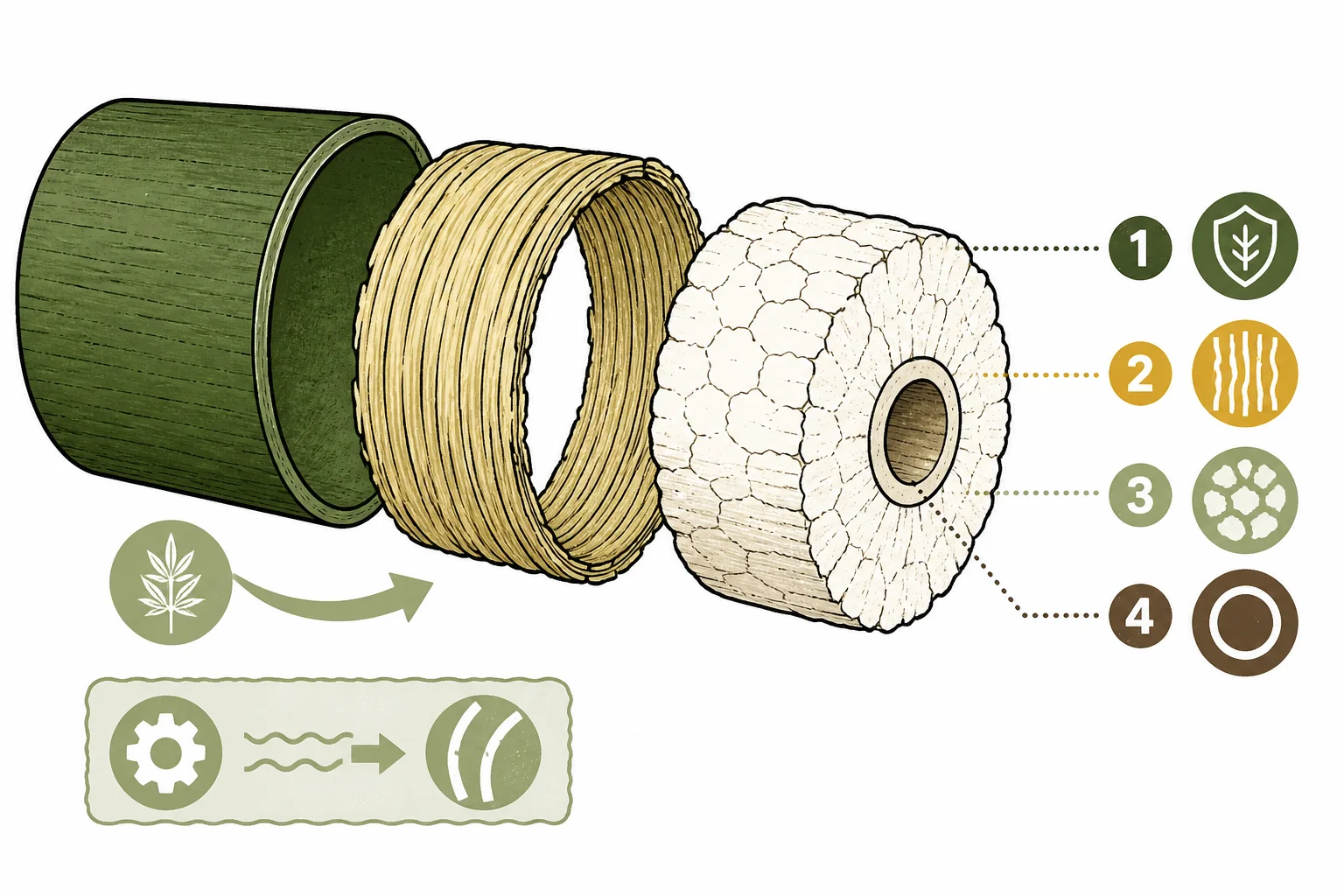
The fiber path
Cleaned bast fiber heading for cloth runs through the same family of steps flax uses.
Opening and carding comb the tangled mass into aligned strands, drawing and doubling even out the thickness, roving twists it into a loose rope, and spinning turns that into yarn.
Long fiber can go through flax-style wet spinning; shorter "cottonized" hemp gets softened and run on the ring or rotor systems built for cotton, often blended in.
That connection to cotton is where the durability comparison from earlier pays off.
Hemp yarn holds its strength through repeated washing where cotton thins and pills, and because it is plant cellulose without synthetic coatings, a worn-out hemp textile breaks down in soil rather than shedding microplastics for decades.
The hempcrete path
The hurd that falls out of the same machine has a second life in building walls.
Mixed with a lime binder and water, roughly a 1:1.5:2 ratio of binder to hurd to water, it cures into hempcrete: a lightweight insulating fill that is not load-bearing but wraps a timber frame in a breathable, mold-resistant, fire-resistant shell.
Builders either cast it wet in place around the frame or press it into precast blocks off-site.
The Agriculture Insight documentary puts the count of hempcrete structures already standing at more than 40,000, most of them in Europe, so treat that as the video's figure rather than a settled census.
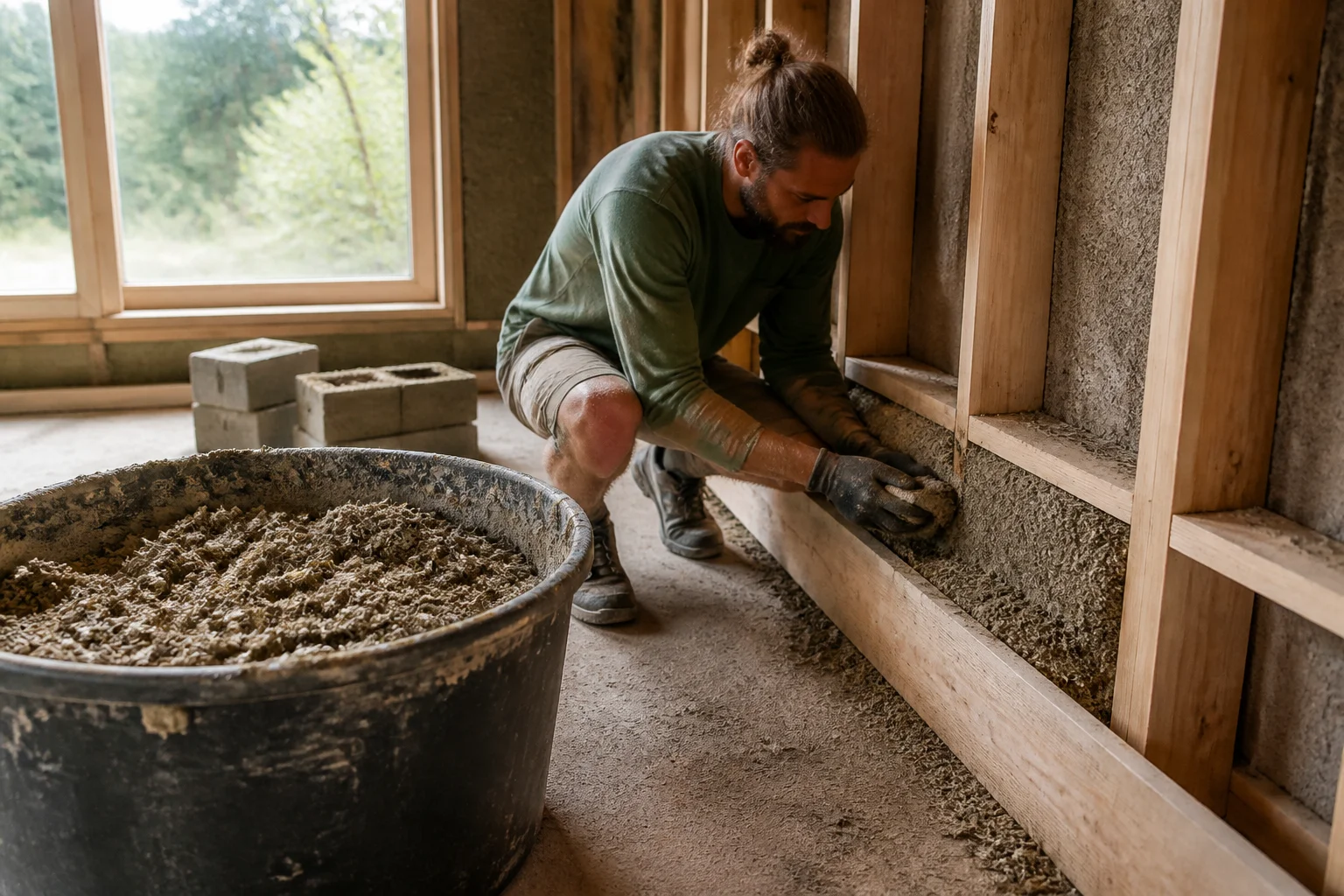
The lime keeps absorbing carbon dioxide as it cures, which is why the material gets described as carbon-storing rather than merely low-emission.
What a Dollar Is Actually Made Of
Rub a dollar between your fingers and it does not feel like paper, because it isn't.
U.S. currency stock is 75% cotton and 25% linen, which ties back to the cotton thread running through the hemp comparison earlier in this tour.
That blend gives the note its snap and lets it survive a trip through the wash.
The paper is made only for the Bureau of Engraving and Printing by Crane Currency in Dalton, Massachusetts, a supplier that has held the contract for generations.
Printing in layers
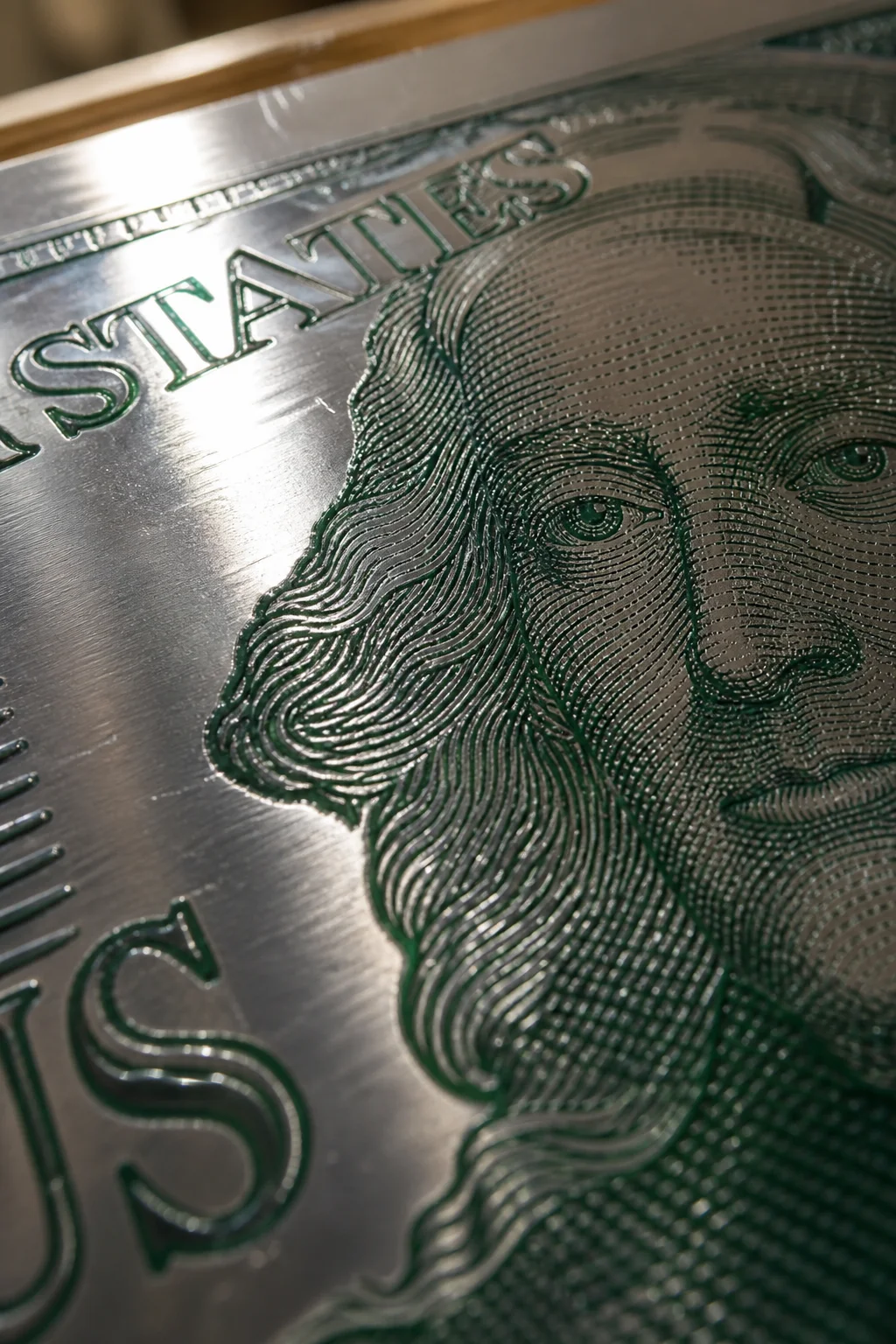
The image is not printed flat. In intaglio printing, ink fills the recessed grooves of an engraved plate, the raised surface is wiped clean, and high pressure forces the paper down into the grooves.
That is why the portrait and lettering feel slightly raised under your fingertip.
The BEP's described sequence prints the backs of the sheets in green, cures them in a vault for three days, then prints the faces in black and cures them another three days.
Security engineered into the note
Each bill carries several defenses stacked together.
On denominations of $10 and up, the large numeral in the lower-right corner uses color-shifting ink that swings from copper to green as you tilt it. That optically variable technology comes from SICPA, whose features appear on more than 90 currencies worldwide.
Hold a note to the light and a watermark portrait matching the main face shows through from both sides, alongside an embedded security thread microprinted with the denomination, like "USA TEN." On the $100, that thread glows pink under ultraviolet light.
Scattered across bills of $5 and higher is microprinting so fine it reads "THE UNITED STATES OF AMERICA," "USA," or "E PLURIBUS UNUM" only under magnification.
Catching the flaws
After printing, multi-note sheets are electronically inspected for defects before serial numbers go on.
Sheets that pass move to numbering; flawed ones get diverted to single-note inspection, which reclaims the good notes rather than scrapping the whole sheet.
When a defect surfaces after serials are applied, the BEP swaps in a star note, a replacement bill with a star in the serial number, because reprinting an identical serial is not worth the effort.
How a Eucalyptus Tree Becomes the Roll in Your Bathroom
From plantation to wood chips
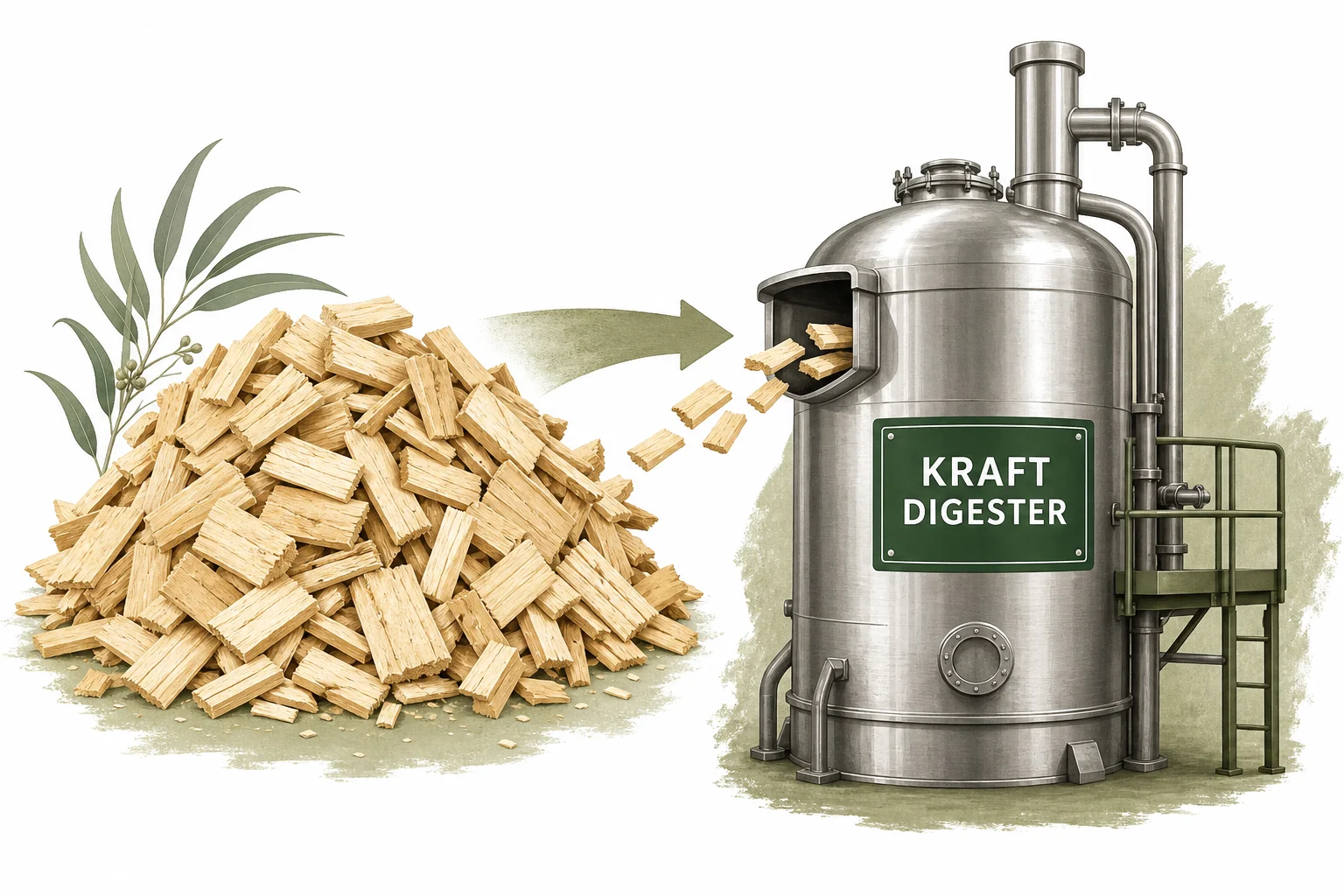
Much of the world's tissue starts on fast-growing eucalyptus plantations. Brazil alone held 9.36 million hectares of tree plantations in 2014, 74% of it eucalyptus, much of it grown on short 5-to-7-year rotations. Harvested logs are debarked, then chopped into uniform chips, the standard feed for a chemical pulp digester.
Cooking the fiber loose
In kraft pulping, the chips are cooked under heat and pressure with alkaline chemicals that dissolve the lignin gluing the wood together, releasing cellulose fibers.
Those fibers get washed, screened, bleached, and dried. Eucalyptus is prized here because its short fibers deliver softness, bulk, and absorption.
The tissue machine
The refined fiber is diluted into a watery slurry, typically just 0.1 to 0.3% solids, and sprayed onto a forming section where the water drains away and leaves a wet mat. Modern machines run this sheet at 1,200 to 2,200 meters per minute.
Press rollers squeeze it, then it wraps a steam-heated Yankee cylinder under a hot-air hood until it hits 94 to 97% dryness.
A doctor blade scrapes it off in a step called creping, packing in micro-folds that shorten the sheet 10 to 25% while adding the softness and stretch you feel when it gives under your hand.
Embossing and the recycled question
Converting lines emboss the sheet, which adds cushiony bulk and spot-bonds the plies together in multi-ply rolls.
Recycled pulp skips the tree, instead repulping wastepaper and floating out the ink with air bubbles. The tradeoff is real: recycled fiber generally carries lower environmental impact, though it loses some length and cleanliness with each pass.
From a Tapped Tree to the Mattress You Sleep On
Natural latex starts as sap inside the bark of the Hevea brasiliensis tree.
A tapper cuts a shallow diagonal groove through the bark, deep enough to open the latex vessels but not so deep it damages the cambium underneath. The milky fluid drips into a cup.
Tappers usually work early in the morning, and the flow slows after roughly one to three hours as the cut vessels plug themselves. Most trees are worked on an alternate-day schedule, so the tree keeps producing for decades.
Turning liquid latex into ribbed sheets
Field latex is strained, diluted, and coagulated in shallow pans with an acid such as formic or acetic acid.
The soft slab that forms gets rolled two or three times on smooth rollers, with the gap tightened after each pass, then run through a diamond-patterned marking roller that presses it into ribbed sheets about 3.2 mm thick.
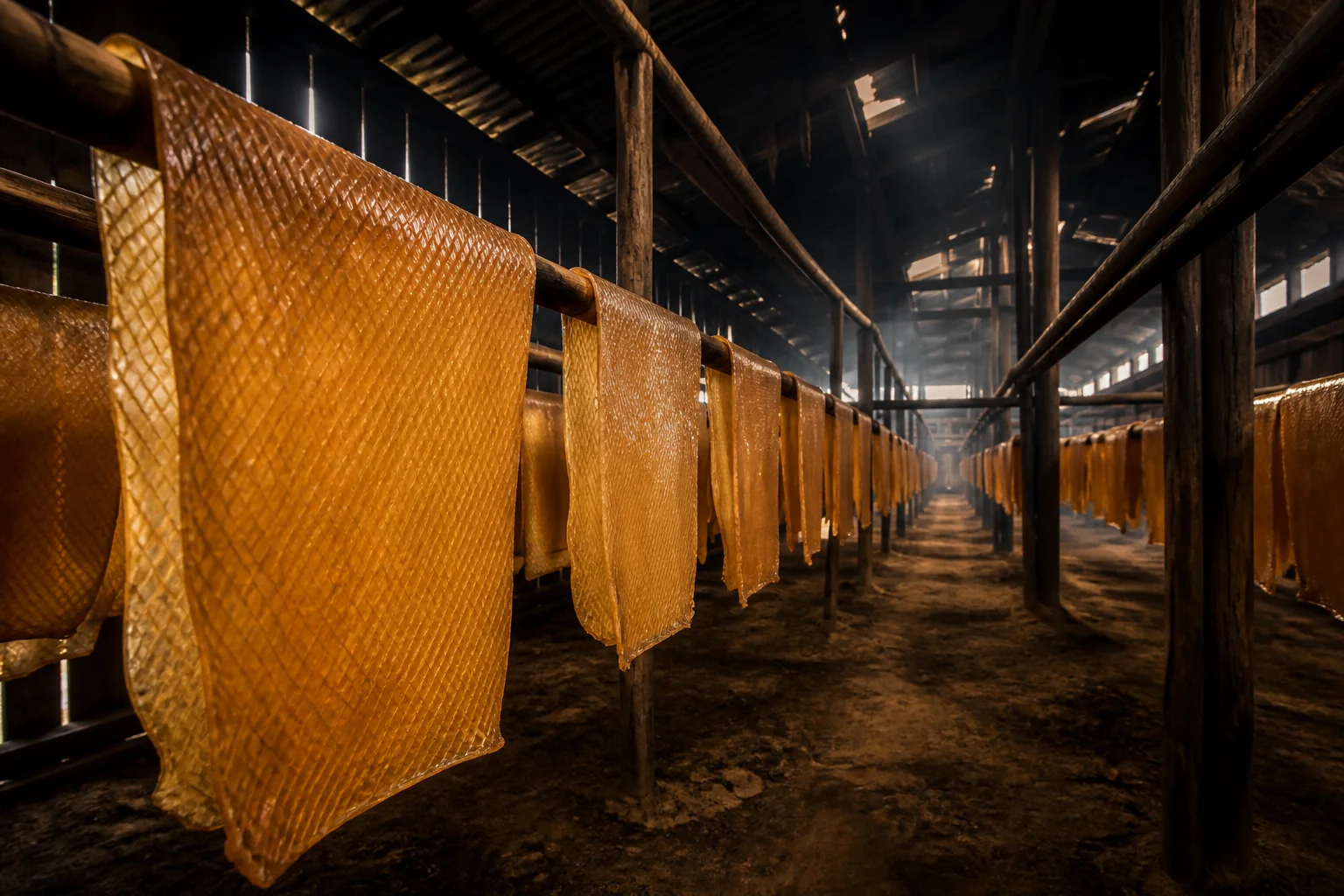
Washed sheets are hung in the shade to drip-dry for two to four hours, kept out of direct sun so they don't turn tacky, before going into a smokehouse.
There they cure over several days at roughly 48 to 60°C. Workers turn the sheets daily to prevent marks and scrub the smokehouse clean before each load to keep contamination down.
Foaming, molding, and vulcanizing a mattress core
Mattress cores are made by whipping liquid latex into a foam, pouring it into a mold, and vulcanizing it with heat so the rubber sets permanently.
The Dunlop method is the simpler pour-and-cure route. The Talalay process adds precision: the mold is only partially filled, vacuum-sealed so the foam expands to fill it, then frozen to lock the cell structure before curing.
Finished cores are washed and dried, then put through machine testing. Under the DIN EN 1957 standard, a core takes 60,000 roller strokes in two stages, and a passing core shows no visible damage afterward.
The market for these beds is sizable. Grand View Research put the global latex mattress market at USD 10.6 billion in 2024, heading toward USD 15.2 billion by 2033. Strategic Market Research estimates natural latex alone held 48.7% of the market, about USD 4.04 billion.
What these four production lines have in common
Look at what runs through all four stories.
A dollar bill carries engraved intaglio lines, color-shifting ink, and a watermark tuned so tightly that a copier can't fake them.
A latex core absorbs 60,000 roller strokes before anyone signs off on it.
Toilet paper starts as a eucalyptus log and comes off a Fourdrinier wire as a continuous sheet.
Hemp stalks get split down to the fiber and the woody core, then rebuilt into cloth and walls. None of these is casual work. Every one is a controlled sequence with tolerances someone measures.
So why do we treat the material as an afterthought? You already pay for precision. The open question is whether you also pay for a supply chain that regenerates the land it draws from.
That's where hemp and natural rubber stand apart from their conventional rivals. Hemp pulls carbon while it grows and asks for less water than cotton over a season, and hempcrete keeps sequestering carbon inside a wall for the life of a building.
Natural latex comes from a tree that keeps producing on an alternate-day tapping schedule for decades without being cut down. Neither is a cure-all, and both carry their own tradeoffs in cost, land, and processing energy.
The point is that you can ask better questions the next time you buy a mattress, a roll of paper, or a house. The engineering is already impressive. The material is the part still up for grabs.
Sources
- Inside the World's Largest Hemp Processing Line – How Fiber & Hempcrete Are Made — Agriculture Insight
- Hemp Production and the 2018 Farm Bill – 07/25/2019 | FDA — U.S. Food and Drug Administration
- 2018 Farm Bill Provisions Related to Hemp – Wisconsin Legislative Council — Wisconsin Legislative Council
- Is Hemp Sustainable? What the Evidence Shows — ScienceInsights
- Comparative study of water requirements and water footprints of fibre crops hemp (Cannabis sativa) and cotton (Gossypium hirsutum L.) — Journal of Agrometeorology
- Yarn Development from Industrial Hemp: A Technical White Paper — IND HEMP
- How to Process Hemp for Fiber, Oil, and Extracts — Biology Insights
- The Future of Hemp Processing Technologies — Canadian Greenfield Technologies
- What Is Hempcrete Properties Uses And Building Codes — Scienceinsights
- FAQs | Engraving & Printing – Bureau of Engraving and Printing — Bureau of Engraving and Printing
- From banknotes and old jeans | MünzenWoche — MünzenWoche
- The Buck Starts Here: How Money is Made | Engraving & Printing — Bureau of Engraving and Printing
- Training Course – Security | U.S. Currency Education Program — U.S. Currency Education Program
- Security Inks | SICPA — SICPA
- U.S. TREASURY AND FEDERAL RESERVE ISSUE NEW $10 AND $5 BILLS — U.S. Department of the Treasury
- Serial Numbers | Engraving & Printing — Bureau of Engraving and Printing
- Expansion of the Brazilian pulp industry: Impacts and risks — Environmental Paper Network
- Tissue Paper Production Line: 7-Step Guide | Parason — Parason
- Tissue Paper Manufacturing Process: Complete Mill Guide (7 Steps) — World Paper Mill
- Impact of embossing on liquid absorption of toilet tissue papers — BioResources
- Tapping and Coagulation — Encyclopaedia Britannica
- Hevea Tree The Plant Behind Natural Rubber — Biologyinsights
- RSS Manufacture — Rubber Research Institute of Sri Lanka
- Evaluation of Physicochemical Properties, Drying Process and Drying Conditions of Natural Rubber Latex and Ribbed Smoked Sheets — Rubber Research Institute of Nigeria
- Dunlop vs. Talalay Latex | Sleep Foundation — Sleep Foundation
- Latexfoam Technology — High-Frequency Vulcanization Consultancy — Jens Szymanska — Latexfoam Technology
- Latex Mattress Market Size And Share Report, 2025-2033 — Grand View Research
- Latex Mattress Market – Latest Insights You Can’t Miss — Strategic Market Research