


Introduction: Why Hemp Denim’s Story Matters
Most people know denim as the fabric behind blue jeans, but far fewer know how deeply rugged plant fibers shaped the textiles that came before it.
To understand the history of hemp denim, it helps to look beyond fashion and into textile history, maritime trade, labor, and material science.
Hemp denim is not just a sustainability talking point.
It sits where sailcloth, canvas, twill, workwear, and modern hemp clothing all meet.
This guide separates documented evidence from recycled myths.
It also explains what we can honestly say about Levi Strauss, original jeans, and hemp’s real place in the story.
What some people Usually Get Wrong
Denim and jeans are related, but they are not the same thing.
Denim is the fabric, while jeans are the garment most often made from that fabric.
It is also true that hemp appeared across many durable historical textiles.
Still, not every popular claim about the first blue jeans being made from hemp is supported by primary records.
Before Denim: Hemp as One of the World’s Oldest Textile Fibers
Long before cotton denim became standard, hemp fiber was already one of the world’s most important utility fibers.
Across Asia and later Europe, it earned a reputation for durability, long wear life, and strong performance in hard use.
People used hemp for rope, sacks, sailcloth, canvas, and rough woven hemp fabrics centuries before modern fashion existed.
Those same traits later made denim valuable in workwear: toughness, abrasion resistance, and reliability.
Ancient and Early Practical Uses
Archaeological and historical evidence points to hemp textiles in ancient China and parts of Central Asia thousands of years ago.
In many places, hemp was part of everyday material culture rather than a niche luxury fiber.
Sailors, farmers, and tradespeople relied on hemp because their tools and garments had to survive repeated stress.
That practical history still matters when discussing hemp twill, hemp canvas, and later hemp denim.
Why Hemp Was Ideal for Utility Fabrics
Hemp is a bast fiber, meaning it comes from the outer stalk of the plant and is naturally strong.
That structure helped give hemp fiber its long-standing reputation for durability in textile applications.
For heavy-duty cloth, strength mattered more than softness alone.
Hemp therefore became a logical precursor fiber in the broader story of rugged fabrics that eventually fed into denim culture.
How Denim and Jeans Got Their Names
The accepted origin of denim is usually traced to the French phrase serge de Nîmes.
This referred to a sturdy twill associated with Nîmes, and over time the phrase was shortened into the word denim.
The word jeans is commonly linked to Genoa, where durable cloth and work trousers were associated with maritime labor.
Together, these names reflect trade routes, geography, and gradual textile evolution rather than one single invention.
From Sailcloth and Twill to Workwear Fabric
Early utility fabrics included sailcloth, canvas, flax cloth, wool cloth, and twill weaves suited to labor and transport.
Some historical accounts also connect 15th-century hemp or flax twills used in sails and utility cloth to the lineage of fabrics that later informed denim.
That does not mean every early twill was denim in the modern sense.
It does show that denim emerged from a long family of durable woven fabrics built for use before style.
Where Hemp Fits Into Early Denim History
In pre-industrial textile production, fiber choice depended on region, climate, trade, and purpose.
Hemp, flax, wool, and cotton all appeared in sturdy cloth, often in different combinations and qualities.
That is why careful wording matters.
Hemp likely influenced the history of rugged cloth and may have appeared in some early workwear fabrics, even when those fabrics were not labeled as modern hemp denim.
Hemp, Flax, and Cotton in Historical Fabric Production
Flax and hemp were both common in strong utility textiles, especially before cotton became dominant in industrial spinning and weaving.
Cotton eventually took over much of the denim market because it was easier to process at scale, dye consistently with indigo, and weave into familiar denim constructions.
Hemp never disappeared from textile history, but it became less central in mainstream denim production.
Industrial systems favored cotton’s softness, availability, and manufacturing efficiency.
Why Hemp Faded From Mainstream Denim
Traditional hemp processing could be labor intensive, and untreated fibers often felt coarser than cotton.
Later, legal stigma around industrial hemp and the wider story often called The War on Hemp further reduced cultivation and investment.
As mills optimized for cotton, brands followed the supply chain that already existed.
That combination of processing difficulty, market dominance, and policy confusion pushed hemp out of the center of denim production for decades.

Levi Strauss, Gold Rush Workwear, and the Hemp Question
Levi Strauss and Levi Strauss & Co. are central to the story of modern jeans, especially in Gold Rush era California.
Their riveted pants for miners and laborers helped define workwear culture and shape what many people now picture when they hear 501 or blue jeans.
This is also where the most debated claim in hemp textile history lives.
What the Historical Record Shows
Hemp historian Jack Herer, in his widely cited book The Emperor Wears No Clothes, states that the original heavy-duty Levi pants were made for the California 49ers out of hempen sailcloth and rivets.
The practical reason was specific: the pockets needed to hold gold panned from sediment without tearing.
That claim is not just a recycled internet story.
Herer cites it as footnote 3 in his documentation, sourced from a personal communication with Gene McClaine at Levi-Strauss & Company in San Francisco in 1985.
That is a named contact at the actual company.
The broader context supports the plausibility of this. At the time, ships sailing to San Francisco ran on hemp sails and ropes.
Covered wagons heading west were protected by hemp canvas tarpaulins.
Hempen sailcloth was one of the most available heavy-duty fabrics in that region at that moment.
Using it for durable workwear pants was not a stretch. It was the practical choice.
What We Can Honestly Claim
A personal communication from 1985 is not the same as a shipping manifest or archived material record. Levi-Strauss & Co. has not made an official public confirmation of hemp fiber content in their founding garments through documented company history.
What we can say honestly is this: the claim that original Levi’s were made from hempen sailcloth comes from a named source inside the company, documented by one of the most serious hemp researchers of the 20th century. That is meaningfully stronger than most sources repeating this story, and it deserves to be treated as credible oral history rather than dismissed as myth.
The most accurate framing is that the evidence is credible and historically plausible, but not yet verified through primary archival records.
Hemp Denim as a Symbol of Freedom, Rebellion, and Counterculture
Denim moved from labor uniform to cultural symbol across the 20th century.
It came to represent labor pride, Western freedom, rebellion, and individualism in ways few fabrics ever have.
Hemp later developed its own counterculture identity.
When paired together, hemp denim carries both stories at once: practical workwear roots and values-driven resistance to disposable fashion.
From Miners to Pop Stars
Denim started with workers, but it did not stay there.
It became part of film, music, youth culture, and even political symbolism, to the point that denim was restricted in parts of the Soviet bloc because it signaled Western freedom and personal choice.
That cultural journey helps explain why hemp denim resonates today.
It combines authenticity, durability, and a material story that feels grounded rather than invented.
A Notable Pop Culture Example
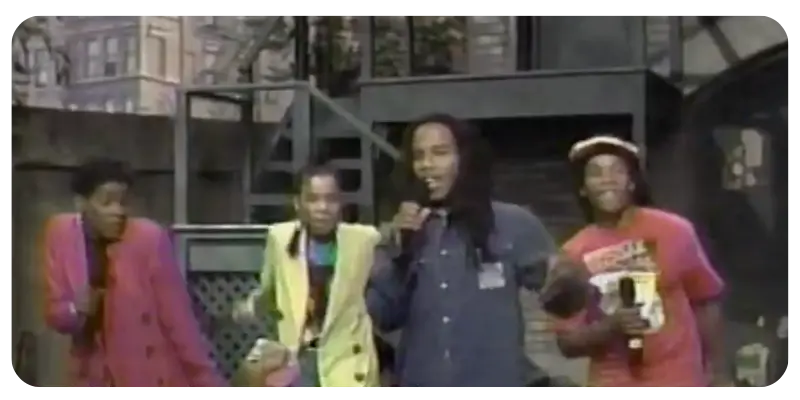
One memorable example came in 1991, when Ziggy Marley wore hemp denim on Sesame Street.
As a cultural anecdote, noted in coverage such as the 13th Street Promotions piece on Ziggy Marley and The Melody Makers, it helped make hemp clothing visible to a wider audience.
The Modern Revival of Hemp in Denim
Modern hemp denim returned because technology improved and priorities changed.
Better fiber processing, especially cottonized hemp, made it easier to spin softer yarns and blend hemp with cotton in familiar denim mills.
At the same time, sustainability concerns pushed brands to revisit alternatives to all-cotton production.
That shift has shown up in designer collections, Levi’s hemp blend experiments, and renewed interest in European and American fiber supply.
Why Brands Are Returning to Hemp
Brands return to hemp for three main reasons: durability, differentiated storytelling, and lower-input crop potential.
A well-made blend can improve comfort while preserving some of hemp’s strength and environmental appeal.
That is why most modern hemp denim is not trying to recreate a rough historical cloth exactly.
It is trying to make a wearable fabric that performs well now.
American-Made Opportunity
There is also a clear opening for American-made apparel built around domestic fiber systems.
HempBlue has framed American-grown hemp denim as part of a broader revival in quality, local sourcing, and mission-driven design.
Bulk Hemp Warehouse speaks to that same movement from the materials side.
With more than 15 years of hemp industry experience and research, the company supports conscious, caring businesses seeking authentic hemp fiber products and fabric resources.
What Today’s Hemp Denim Is Actually Made Of
Most hemp denim fabric on the market today is a blend.
Common mixes pair hemp with cotton, organic cotton, recycled fibers, or a small amount of stretch fiber to improve manufacturability and comfort.
It also helps to distinguish between pure hemp fabric, hemp canvas, hemp twill, and hemp denim.
Denim usually refers to a specific twill construction associated with jeans, while canvas and other twills may be similar in toughness but different in weave and finish.
Readers who want to compare actual fabric options can browse Bulk Hemp Warehouse’s hemp denim category.
Useful examples include 63 hemp 37 organic cotton indigo denim per yard and 55 hemp 45 organic cotton indigo denim per yard.
Common Fabric Constructions
Selvedge: denim woven on shuttle looms with a self-finished edge.
Twill weave: a diagonal weave structure that gives denim its recognizable pattern and strength.
Cottonized hemp: hemp processed to behave more like cotton in spinning systems.
Denim blends: fabrics combining hemp with cotton or other fibers for balance.
Modern constructions are engineered for wearability, not just historical purity.
That is why many of the best hemp jeans feel softer and easier to break in than older hemp textiles.
Firsthand Experience and Real-World Wear
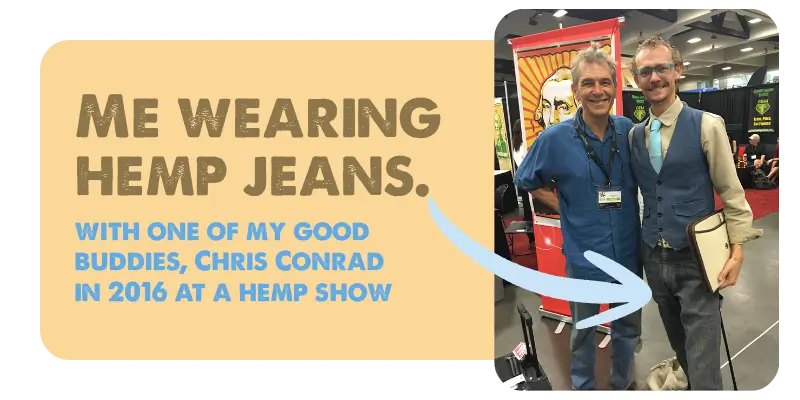
After wearing hemp jeans and hemp denim clothing for more than 20 years, one pattern becomes hard to ignore: the fabric rewards patience.
In a wardrobe that is now more than 80% hemp-based, the pieces that stay in rotation are usually the ones that softened with time and kept their structure.
That long-term wear matters more than a first-touch impression.
Hemp clothing often feels breathable, durable, and stable in a way that makes people return to it once they have lived in it.
What Long-Term Hemp Wear Teaches
Hemp garments often improve with repeated wear and washing.
Softening over time is one of the most practical reasons loyal wearers stay with hemp blends and woven hemp fabrics.
People who choose hemp also tend to care about the story behind what they wear.
Function matters, but so does the connection to material honesty and lasting use.
Common Myths and Mistakes to Avoid
One of the biggest mistakes is claiming that all original jeans were hemp.
Another is acting as if hemp denim has one neat origin point, when the real story is a layered mix of fiber history, weaving traditions, trade, and industrial change.
It is also important not to confuse industrial hemp with marijuana.
Any serious Hemp Versus Marijuana discussion should explain that textile hemp concerns fiber uses, cultivation rules, and low-THC industrial applications.
Myth Versus Evidence
Use phrases such as evidence suggests, some sources argue, and documented records show.
That language protects credibility and makes the article more useful to journalists, educators, and brands.
Readers who want broader context can explore the history of hemp its 10000 uses an animation, hemp culture in ancient history and the ubiquity of hemp, and properties benefits and history of hemp textiles.
FAQ
Were jeans originally made from hemp?
Not conclusively, based on my research. But I’m waiting to be shown hard evidence, which I will add to this page for sure.
Hemp was common in durable historical textiles, and some sources argue early workwear may have used hemp canvas or blends, but strong primary-source proof that the first jeans were hemp is limited.
Will hemp be banned in 2026?
No broad ban is in place in 2026. Industrial hemp remains legal in many regions, though cultivation, processing, and product rules still vary by country and state.
When was hemp clothing invented?
Hemp clothing dates back thousands of years.
Evidence from ancient Asia shows hemp fibers were used in textiles long before modern denim or jeans existed.
Why was hemp originally banned in the US?
Industrial hemp was swept into broader cannabis restrictions during the 20th century.
Policy confusion, stigma, and regulation limited cultivation even though textile hemp is a low-THC crop.
Conclusion: Hemp Denim’s Past Explains Its Future
Hemp’s place in textile history is ancient, while denim’s identity formed later through twill, trade, and workwear culture.
Their overlap is real and historically meaningful, even if some famous claims need more careful sourcing than they usually receive.
The strongest version of The Origins of Denim story is balanced and evidence-based.
Hemp clearly mattered in the long history of durable cloth, and its return to modern denim looks less like a novelty than a practical return to resilient fibers that never stopped proving their worth.